‹
›
Chicken Rates Change On Daily Basis
We Deliver Next Day
Learn how to thaw chicken safely in the fridge, cold water, or microwave, with practical steps, thawing times, and advice on high-heat cooking.
A kitchen guide from Shaguftaz.com
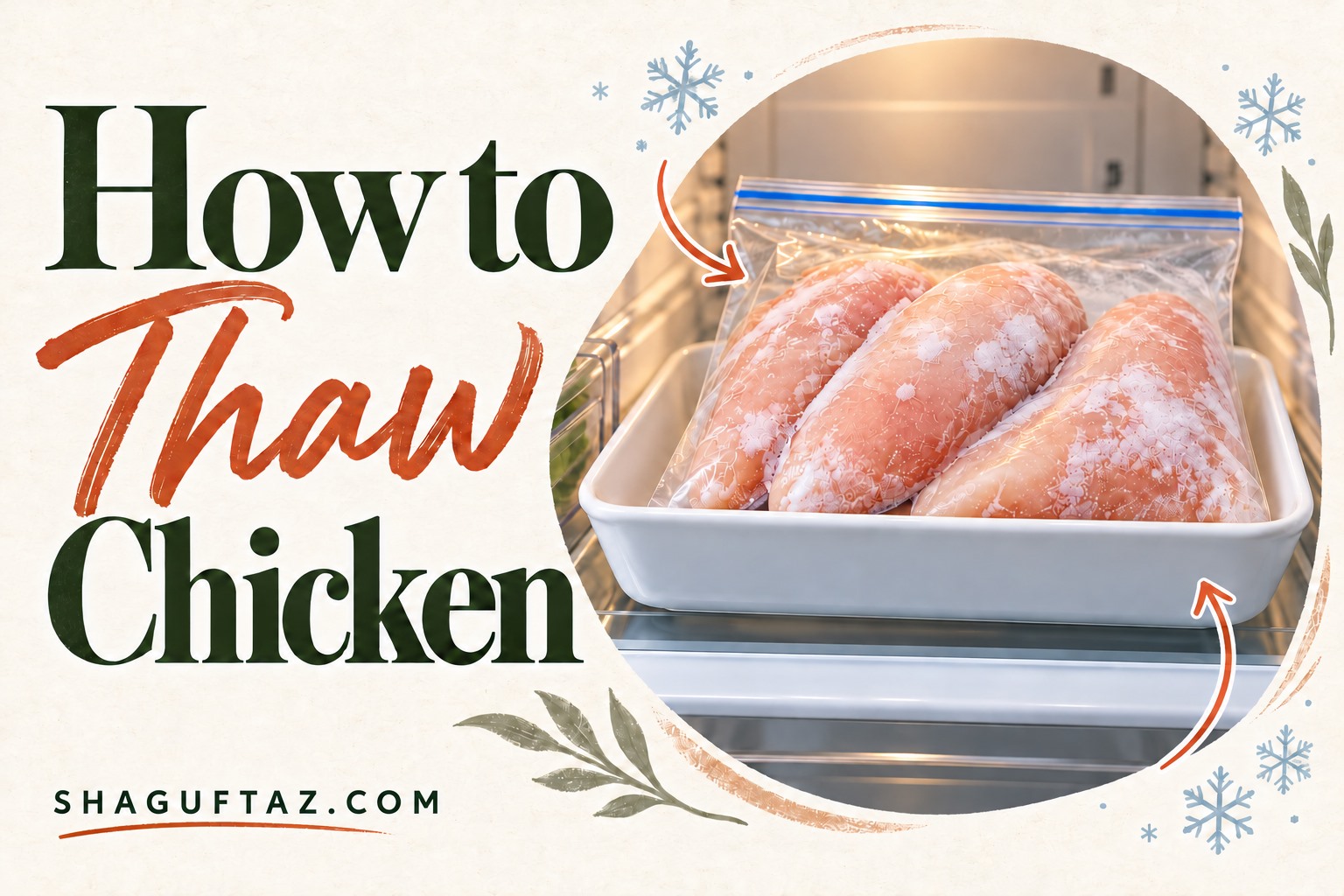
You are ready to make chicken curry, biryani, or a quick dinner—then discover the chicken is still frozen. Leaving it on the counter may seem convenient, especially if you plan to cook it over a high flame. But safe cooking starts before the pan goes on the stove.
The three safe ways to thaw chicken are in the refrigerator, in cold water, or in the microwave. Choose the method that fits the time you have, and follow the steps below.
As chicken sits at room temperature, its surface can warm enough for bacteria to multiply while the centre remains frozen. Some bacteria can produce heat-resistant toxins, so cooking cannot always make mishandled chicken safe again.
The size of your stove flame does not tell you the temperature inside the meat. Whether you are preparing a slow simmered curry or cooking over high heat, safe thawing still matters.
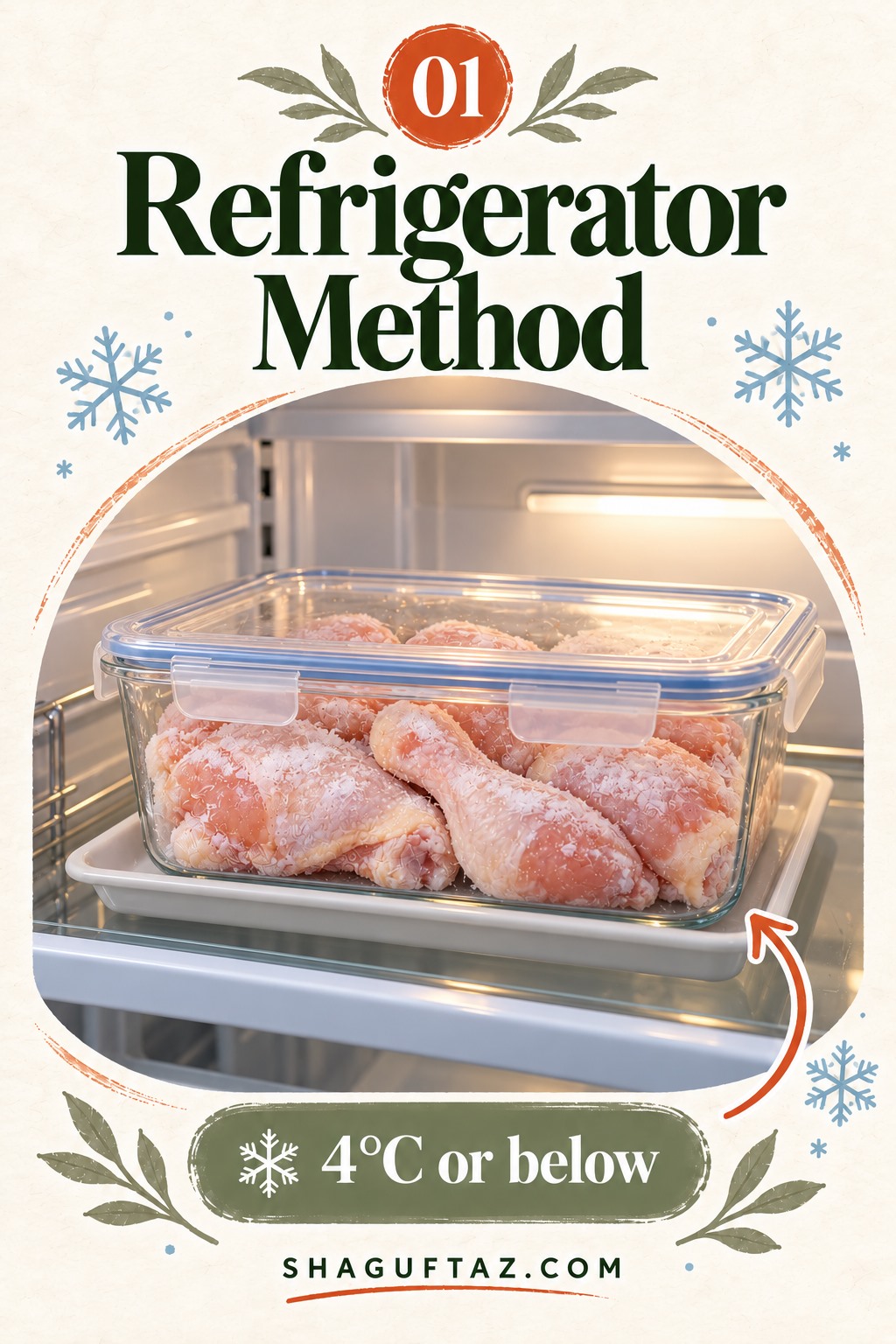
This is a convenient choice when you can plan ahead.
After it has thawed in the refrigerator, cook it within another 1–2 days.
Shaguftaz.com kitchen tip: If chicken is on tomorrow’s menu, check your freezer today. Freezing future portions in flat bags makes meal planning easier.
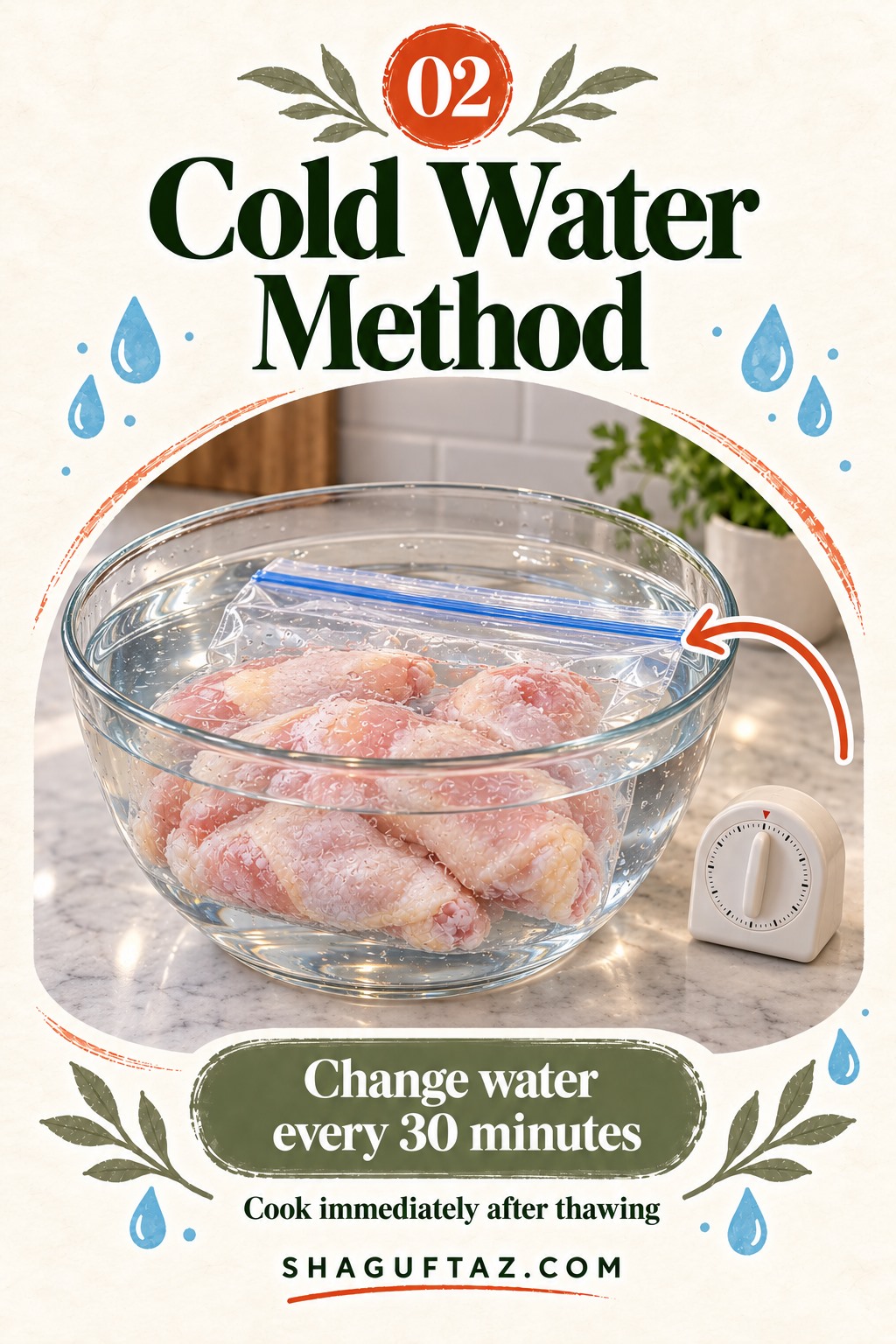
Need it sooner? Use a cold-water bath and set a timer.
A small package of boneless chicken weighing about 450 g (1 lb) may thaw in an hour or less. Larger packages can take several hours. Never use warm or hot water. A bowl of still water is fine during each 30-minute interval; leaving the same water unchanged for hours is the problem.
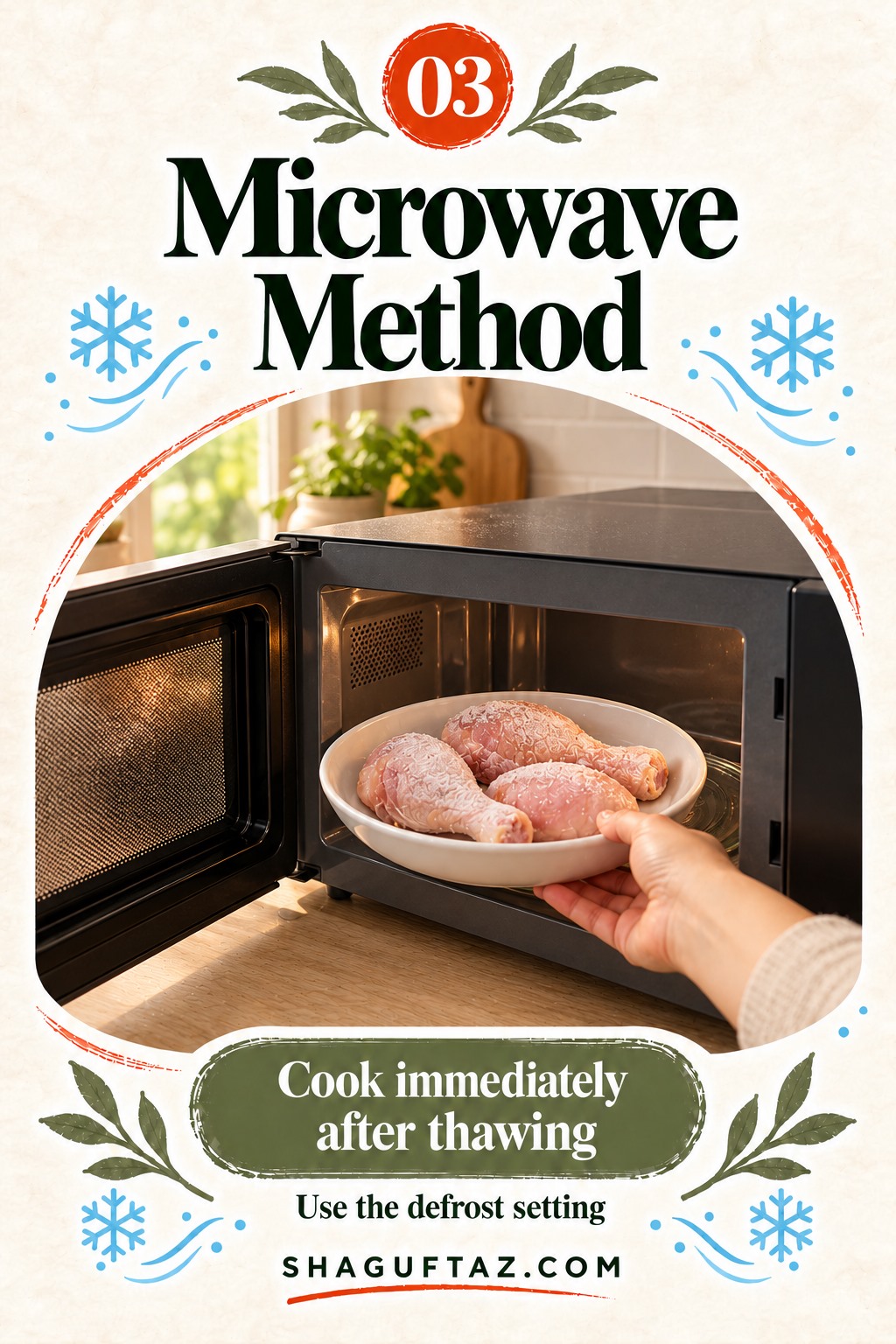
For a quick option, use your microwave’s defrost setting. Follow the appliance instructions for the chicken’s weight, turning or separating pieces as directed.
Cook immediately afterward: some areas may warm or begin cooking during defrosting. Do not microwave-thaw chicken and then leave it waiting while you prepare the rest of dinner.
Use a food thermometer to check that the thickest part of the chicken reaches 74°C (165°F), avoiding bone. Check several places when cooking a whole bird or uneven pieces. Colour and flame strength cannot replace a temperature reading.
No. A plate or bowl catches juices but does not keep chicken cold. The outside can warm enough for bacteria to multiply while the centre is still frozen. Thaw it in the refrigerator, in a properly managed cold-water bath, or in the microwave instead.
That is not the recommended cold-water method. Water that starts cold can warm up during those hours. Keep the chicken in a sealed, leakproof bag, use cold water, replace it every 30 minutes, and cook immediately after thawing. In hot weather, make sure the tap water is actually cold; use chilled water if necessary.
Proper cooking kills harmful bacteria when the chicken reaches a safe temperature throughout. But a high flame alone does not prove that the centre is cooked safely. More importantly, some bacteria can produce heat-resistant toxins during improper storage. Cooking cannot reliably rescue chicken that has been mishandled. This does not mean every piece left out contains toxins; it means you cannot count on heat to undo unsafe thawing.
No. People in all these places use many cooking methods, including grilling, frying, roasting, and simmering. Food-safety advice is based on temperature, time, and how bacteria behave—not nationality or flame size. Official recommendations can differ in their details, but using a high flame does not justify thawing chicken on the counter. Both the UK Food Standards Agency and Food Standards Australia New Zealand advise against thawing food at room temperature.
An unsafe practice does not cause illness every time. Past meals without noticeable illness do not guarantee the next meal will be safe. You also cannot reliably judge harmful bacteria by the chicken’s smell or appearance. A safer thawing routine reduces an avoidable risk.
Yes. A warm kitchen can let the surface of chicken warm faster. USDA advises limiting perishable food left out at room temperature to two hours, or one hour when the surroundings exceed 32°C (90°F). These are limits for handling food, not recommended counter-thawing times.
If it has been sitting at room temperature on a plate or in unchanged water for 3–4 hours, and you cannot verify it remained refrigerator-cold throughout, the safest choice is to discard it. A frozen centre does not prove the surface stayed safe. Do not rely on extra cooking to make it safe.
No. Use one of the three methods above. Overnight counter thawing allows the outside to remain warm for too long, even if the middle still feels frozen.
No. Use cold water, change it every 30 minutes, and cook the chicken immediately after thawing.
For a meal you plan to marinate ahead, choose refrigerator thawing and keep the chicken refrigerated during marinating. If you thaw it in cold water or the microwave, cook it immediately rather than setting it aside for a long marinade.
Make safe thawing part of your everyday cooking routine. Save this guide from Shaguftaz.com for the next time you take chicken out of the freezer.
For further information about safe chicken handling and thawing, you can visit the USDA Food Safety and Inspection Service website.

